I will get back to the P-system articles at some point, but I needed a bit of a break, so I figured I’d mention some of the other stuff I’ve been working on in my spare time.
Lately, I’ve been playing around with electronics again. Specifically, the Arduino platform. I was very interested in electronics as a kid, but I kind of fell out of it over the years, and in fact I gave away a bunch of my old components to friend-of-a-friend’s kid, a few years ago. But I’m finding that there’s now a whole world of highly-integrated electronics, all packaged up for hobbyist use, and you can just buy this stuff, and have it delivered.
Hobbies are like potato chips – you can’t have just one.
I did, in fact, kind of fall into working with circuits again from another of my hobbies. I putter around with synthesizers and sound design, and I had an idea for a new kind of synthesis, which I decided I really wanted to implement in a hardware form. And that lead to the Daisy Seed, which is an audio-focused digital signal processing platform. And specifically the Daisy Pod, which has all of the I/O you need to make a digital synth, guitar effects pedal, or the like, without needing any additional parts.
As it turned out, the idea I came up with didn’t quite work out, but it was really nice to just write a bunch of code and try something out, without having to figure out a build system, package manager, and hosting solution. A lot of the “real work” we do these days seems to involve more system administration than actual software development.
When you buy a Christmas gift exchange gift, and it ends up being a gift for you, too
I had been aware that Arduino existed for a very long time, but I had never considered getting back into “playing with” electronics, after all this time. But then we had one of those White Elephant gift exchanges at work, and I bought a very basic (off brand) Arduino starter kit for the exchange, thinking it could be kind of fun for some of the developers in the company who’d never done any low-level programming at all, to get to play with writing C code for an 8-bit processor with no OS.
It was interesting to see how much excitement was generated by that gift. It was pretty hotly-contested, and it got me to thinking: “Hey, maybe I should get back into this, in a more-focused way?”. And so, I got the slightly-fancier version of the starter kit, which comes with a prototyping breadboard, and a whole bunch of components, ranging from resistors and capacitors, up to an inertial measurement unit, a passive IR motion detector, and a couple of screens.
And I’ve been having a lot of fun with it. It’s been decades since I worked with embedded systems, and there is just something so satisfying about making an LED light up, a speaker make a noise, or a motor move, in reaction to a sensor, or a button.
Things change, things stay the same
It’s interesting what has stayed the same, and what has changed, in the years since I experimented with electronics in high school. On the “same” side, it’s interesting to see plug-in breadboards have remained relevant all this time. I think the breadboard that came in my starter kit could easily have passed for an artifact of the 1980s. Of course, it was vastly cheaper (adjusted for inflation). And, of course, resistors and capacitors, and three-legged transistors and voltage regulators are just the same as they’ve always been.
And you can still get 5v TTL logic chips in the entire array of confusing types they had in the 1980s. Of course, they’re all available in CMOS high-speed variations now, and work at any reasonable battery-powered voltage, rather than requiring 5v.
One thing I definitely do not approve of in modern electronic experimentation is the rise of so-called “DuPont jumpers”, over the cut-to-length solid-core jumpers we used back in the 1980s. My god, having springy leads arching over the top of the board in a rat’s nest is no fun at all.
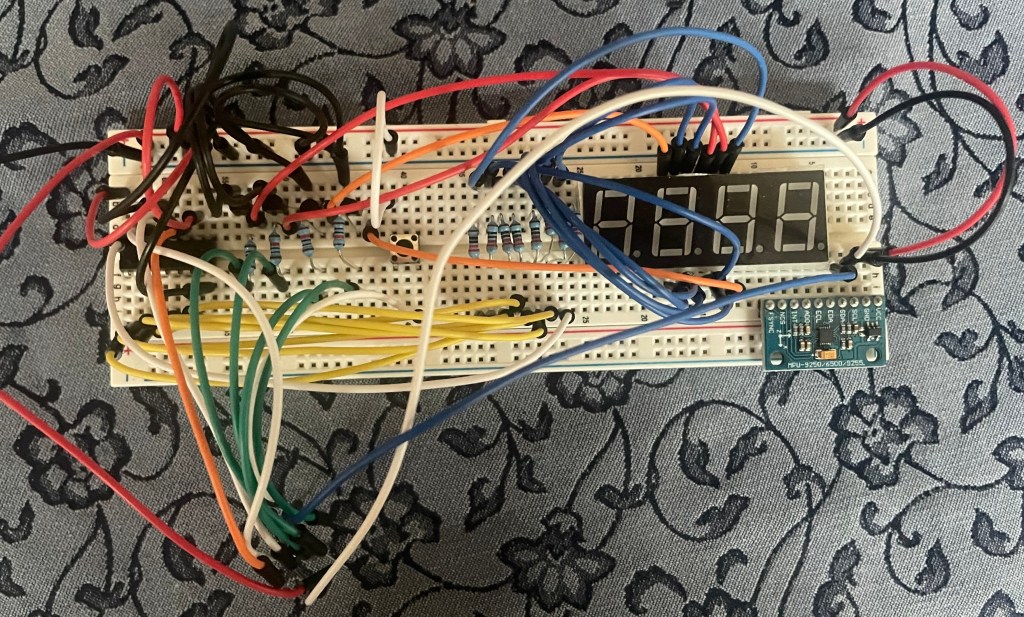
Fortunately, you can still get the old-style solid-core jumpers, or cut them to length yourself from a coil of wire.

The electronics Maker boom, vs how consumer electronics are actually made these days
Back in the 1980s, we were just starting to come into the era where every gadget contained a microprocessor. It was still relatively-common for consumer electronics to be made with parts you could buy off the shelf at Radio Shack, or your other local electronics component store. Oh, yeah, and we had local electronics component stores. These days, it’s pretty unusual to be able to buy parts at local retail. Radio Shack is a mostly-dead shell of its former glory, and even Fry’s Electronics in the SF Bay Area is no more. If you can’t sell soldering irons and power transistors to enthusiasts in Silicon Valley, where else could that possibly work?
It’s..weird, though, because the impression I get online is that there are more kids and younger adults experimenting with electronics now, than there ever were. But the adage “retail is dead, the internet killed it” is still true, even for (especially for?) specialist markets. Maker spaces exist, we even have one local to me – which reminds me to look up joining them at some point.
It’s becoming more difficult to find through-hole versions of new parts, since basically all mass-market electronics these days are made with surface-mount technology. But something that didn’t exist back then are entire boutique businesses who take interesting SMD parts, and mount them to little boards with pin headers on them, so you can plug them into a breadboard, or solder them into a protoboard, or even onto a custom PCB. Like, just look at this list from Adafruit – dozens and dozens of modules, from WiFi to display drivers, to mass-storage, to audio, to battery chargers and motor controllers, to sensors!
And you can get circuit boards fabricated, and even loaded up with parts, from any number of PCB fab factories around the world.
The Nostalgia factor
Another fun thing about the modern microcontroller renaissance is that since you can buy these little boards with everything from a processor to I/O built in, there is a little cottage industry of people building retro-computing devices on top of these ubiquitous microcontroller boards. For example – the PicoCalc – a suit-pocket computer, based on the Raspberry Pi Pico microcontroller board.
You’ll be seeing more with the PicoCalc later – in addition to being a handheld BASIC machine, it’s also compatible with Arduino, and has GPIO pins broken out along the side, so can interface directly with my various electronics projects.
 markbessey.blog
Leave a comment